
Education Industry Insights: A Journey Through the Changing World of Learning
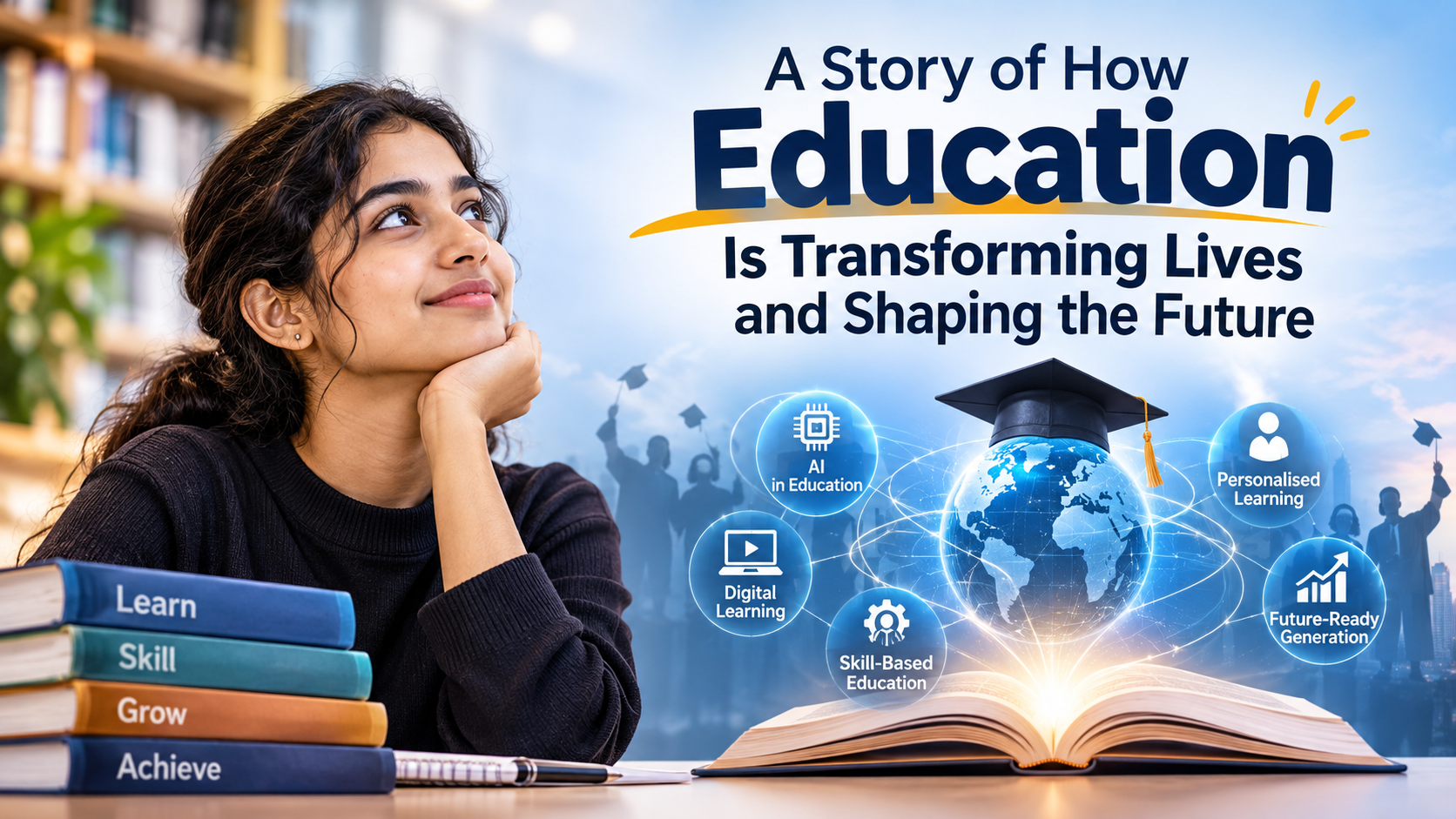
The education industry is evolving faster than ever. From AI-powered learning and digital classrooms to skill-based education and personalised learning, discover how technology and innovation are transforming the way students learn and prepare for the future. Explore the latest education industry insights with Edubridger and understand why continuous learning is the key to building a successful future.
A Story of How Education Is Transforming Lives and Shaping the Future
It was a Monday morning when Rahul, a final-year college student, sat at his desk wondering what his future would look like.
Like thousands of other students, he had spent years attending classes, completing assignments, preparing for examinations, and earning academic qualifications. Yet, one question continued to trouble
Explore the latest education industry insights, including AI in education, digital learning, skill-based education, and emerging trends shaping the future of learning.
him:
“Am I truly prepared for the real world?”
His classroom had taught him theories, concepts, and definitions. But the professional world demanded something more — practical knowledge, communication skills, adaptability, digital awareness, and the ability to solve real-life problems.
Rahul's question reflects a challenge that today's education industry is increasingly trying to address.
Education is no longer just about textbooks, classrooms, and examinations. It is becoming a dynamic ecosystem where technology, skills, innovation, and industry requirements come together to shape the future of learning.
The Changing Face of the Education Industry
A decade ago, the traditional classroom was considered the primary destination for learning. Students depended heavily on teachers, printed materials, and physical libraries.
Today, the learning experience looks very different.
A student sitting in a small town can attend an online lecture conducted by an international educator. Another student can learn coding through interactive platforms, while a working professional can upgrade their qualifications without leaving their job.
The education industry has expanded beyond geographical boundaries.
Digital learning platforms, virtual classrooms, online certification programmes, and hybrid learning models have made education more accessible and flexible.
But this transformation is not simply about replacing classrooms with computers. It is about creating better learning experiences that meet the changing needs of students.
Technology: The New Learning Companion
A few months after graduation, Rahul discovered an online learning platform that offered courses related to his career interests.
He could learn at his own pace, revisit difficult topics, participate in discussions, and access learning resources whenever he needed them.
This experience introduced him to one of the biggest developments in modern education: educational technology, commonly known as EdTech.
Technology is changing how educational institutions deliver knowledge and how students consume information.
Some important developments include:
- Artificial Intelligence: AI-powered tools can support personalised learning, provide instant feedback, and assist educators with administrative tasks.
- Online Learning: Students can access educational programmes and learning materials from different locations.
- Virtual Classrooms: Digital classrooms make remote collaboration and interactive learning possible.
- Learning Management Systems: Institutions can organise courses, monitor student progress, and manage educational resources more efficiently.
- Digital Assessments: Online evaluation tools offer new ways to assess students' understanding and performance.
However, technology alone cannot guarantee quality education. Effective teaching, meaningful interaction, and responsible use of digital tools remain equally important.
The Growing Importance of Skill-Based Education
Rahul soon realised that having a degree was only one part of building a successful career.
During his job search, employers were interested in more than his academic marks. They wanted to understand his practical abilities, problem-solving approach, teamwork, and communication skills.
This reflects another major shift in the education industry: the growing importance of skill-based learning.
Modern workplaces are evolving, and educational institutions are increasingly expected to prepare students for real-world responsibilities.
Skills such as digital literacy, critical thinking, creativity, leadership, communication, and technical proficiency are becoming valuable across industries.
This is why many educational programmes are incorporating:
- Practical projects and assignments.
- Industry-oriented training.
- Internships and work experience.
- Professional certification programmes.
- Communication and personality development.
- Career-focused learning opportunities.
The goal is simple: education should not only help students pass examinations but also prepare them to apply their knowledge confidently.
Personalised Learning: Every Student Has a Different Story
Think about a classroom with 40 students.
Some understand mathematical concepts quickly, while others need additional explanations. Some prefer visual learning, while others learn better through reading, listening, or practical activities.
Can one teaching method work equally well for everyone?
This is where personalised learning becomes important.
With the support of digital platforms, adaptive learning tools, and data-driven insights, educators can increasingly understand individual learning patterns and provide suitable learning experiences.
Personalised learning focuses on:
- Individual learning speed.
- Different academic strengths and weaknesses.
- Specific learning goals.
- Personal interests and career aspirations.
- Continuous feedback and improvement.
The future of education is not necessarily about making every student learn in the same way. It is about creating opportunities for every student to learn effectively.
The Challenges Behind the Transformation
Despite the remarkable developments, the education industry still faces several challenges.
Not every student has access to reliable internet connectivity, digital devices, or quality educational resources. Some institutions struggle to adopt new technologies, while others face difficulties balancing traditional teaching methods with modern learning approaches.
There are also concerns about:
- The digital divide between urban and rural communities.
- Maintaining educational quality in online programmes.
- Student engagement and motivation.
- Data privacy and responsible AI adoption.
- The gap between academic knowledge and industry expectations.
- Making quality education affordable and accessible.
These challenges remind us that educational innovation must be inclusive.
Technology should create more opportunities, not widen existing inequalities.
The Future of Education: A World of Endless Possibilities
A year later, Rahul looked back at his learning journey.
He had completed additional courses, developed practical skills, improved his communication, and gained a clearer understanding of his career goals.
His transformation did not happen because of a single degree or classroom lesson. It happened because he embraced continuous learning.
And that is perhaps the most important lesson for the future of education.
The education industry is moving towards a more flexible, technology-enabled, skill-oriented, and student-centred approach.
In the coming years, we can expect further developments in:
- AI-supported personalised education.
- Immersive learning through virtual and augmented reality.
- Greater collaboration between educational institutions and industries.
- Micro-credentials and flexible certification pathways.
- Lifelong learning and professional upskilling.
- More accessible and inclusive educational experiences.
The institutions that successfully combine quality teaching, practical learning, technology, and student support will play an important role in shaping tomorrow's education landscape.
Edubridger's Perspective: Education Is More Than a Qualification
At Edubridger, we believe education should create opportunities, build confidence, and prepare individuals for a constantly changing world.
A qualification may open a door, but knowledge, practical skills, and the willingness to keep learning help individuals move forward.
The education industry is evolving, and students, educators, institutions, and professionals all have an important role in this transformation.
Rahul's story is not just the story of one student. It represents the aspirations of millions of learners who want to build a better future through education.
The question is no longer simply, "What are you studying?"
It is also, "What are you learning, what can you do with that knowledge, and how will it shape your future?"
Because the future of education is not just about producing graduates.
It is about creating capable, confident, and future-ready individuals.
Final Thought: Education is a journey that never truly ends. As industries change, technologies advance, and opportunities evolve, the ability to learn, adapt, and grow will remain one of the most valuable skills anyone can possess.
Stay connected with Edubridger for more insights, ideas, and updates on the evolving world of education.

Written by
admin